
Prepositions of Time
Prepositions of Time (in, on, at) We use "in" for months, years, centuries, and long periods. “I was born in 1990”, “Jeans became fashionable in the 1960s”. We use "on" for days and dates. “I have a meeting on Monday”, “My flight is on the 17th of December”. We use...
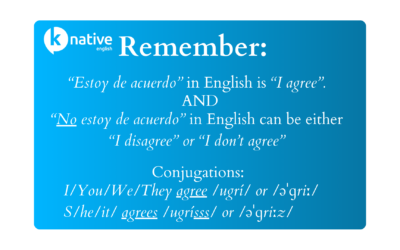
Estoy de acuerdo
Remember: "Estoy de acuerdo" in English Is "I Agree"

Investment Vocabulary 101
Investment Vocabulary 101 Investing can be complicated, especially if you don´t speak the language. However, understanding a few key words can help. Today, we explore five essential pieces of investment vocabulary: 1) To Invest/Investment To invest means to use your...

Less “Moreover”, Please!
Less “Moreover”, Please! “I like something a lot” OR “She really likes something”. Discourse markers are not easy to remember. That must be why everyone finds the adverb moreover and then uses it again and again. Today we will look at some synonyms for moreover and...

Remember: “I like something a lot” OR “She really likes something”
Remember: “I like something a lot” OR “She really likes something”. We don’t say: “I like a lot padel”. We say: “I like padel a lot/ I really like padel”.
/z/ or an “s” when you hum
/z/ or an “s” when you hum (tararear) Useful for words beginning with z, saxon genitive (‘s) and most plurals: zebras: /zɛbrəz/ or /sssébrusss/ cheeses: /ʧiːzɪz/ or /chísssesss/ zoos: /zuːz/ or /sssúuusss/
The Need to Read
Why?: These days, reading is a difficult hobby to practise.There is a LOT of distraction. It is a shame, because reading is incredibly important for learning new vocabulary and understanding grammar. When we read, we see words used in context, which helps us infer...
Used to or Use to? Which is correct?
The answer is both of them, and the rule is quite simple to remember. The meaning, in this case, is "Solía" and "Use" or "Used" is a verb. Don't get confused between "Acostumbrarse", which translates to "To get used to" or "To be used to" where the word "used" is...
Why You Might Need a Residential English Course
Is a residential course worth considering?
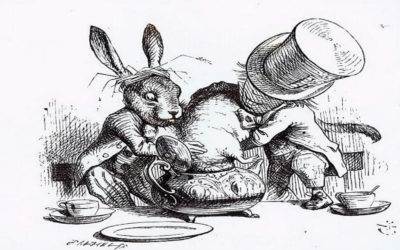
Mad as a March Hare
Hello my Frengers! Last week we went over the curious (and rather dark) origin of the charming Mad Hatter from Lewis Carroll’s books “Alice in Wonderland” & “Through the Looking-Glass.” This week is the turn for his furry tea buddy the March Hare! So, let’s find...